



By Elpida Kontomarou Psychologist | Cognitive Behavioral Psychotherapist (CBT) MSc in Adolescent Mental Health

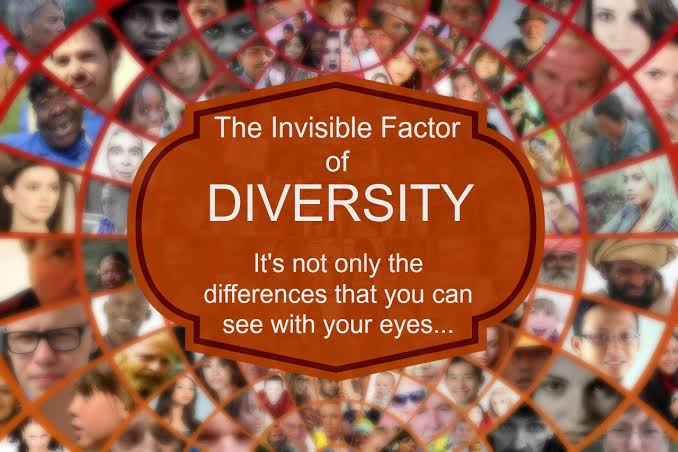
When we talk about diversity, our attention often turns to characteristics that are immediately visible. Yet a significant part of human diversity remains unseen. Mental health difficulties, neurodivergence, chronic health conditions, non-apparent disabilities, socioeconomic circumstances, traumatic experiences, family backgrounds and individual life histories may not be visible to others, but they can profoundly influence the way a person experiences, interprets and navigates the world.
Invisible diversity reminds us of an essential psychological principle: what we see in another person never tells us their whole story.
The human mind naturally relies on rapid judgments and social categorisation to make sense of complex information. Although this cognitive process is often useful, it can also lead to inaccurate assumptions when we believe that we can understand another person’s abilities, needs or psychological state simply from their outward appearance.
For people living with concealable or non-apparent conditions, identities or experiences, an additional challenge may emerge: deciding whether, when and to whom personal information should be disclosed. Disclosure can create opportunities for understanding and support, but it can also expose individuals to misunderstanding, stigma or differential treatment. Invisibility, therefore, should never be confused with the absence of difficulty.
One of the challenges faced by people with non-apparent conditions is having the legitimacy of their experience questioned. Comments such as “You don’t look like you have a disability,” “You seem perfectly fine,” or “Everyone gets tired” may not always be intended to cause harm. Nevertheless, they can communicate a powerful underlying message: that a person’s difficulty must be visible in order to be considered real.
Research on invisible disabilities in the workplace has highlighted the distinctive challenges associated with disclosure, accommodation and the management of other people’s perceptions. Employees with non-apparent disabilities may need to weigh the potential benefits of disclosure against concerns about stigma and differential treatment (Santuzzi et al., 2014).
A similar pattern can be observed in mental health. Stigma remains an important barrier to professional help-seeking. A systematic review involving 144 studies found that mental health-related stigma can negatively influence help-seeking, with concerns about disclosure among the most frequently reported stigma-related barriers (Clement et al., 2015).
Some people may appear to function effectively while privately investing considerable cognitive and emotional effort in meeting the demands of everyday life. Neurodivergence provides an important example. Research on autistic adults has examined social camouflaging, a process that can involve masking certain behaviours or using compensatory strategies in social situations. Qualitative findings indicate that camouflaging may be motivated by a desire to fit in or connect with others, while also being associated with experiences such as exhaustion and threats to one’s sense of self (Hull et al., 2017).
Related research has also suggested that camouflaging may require considerable cognitive effort and may be associated with increased stress, anxiety and depression in some autistic individuals (Lai et al., 2017). These findings highlight an important distinction: external functioning does not necessarily reflect internal wellbeing.
A person may perform well professionally, maintain relationships, fulfil responsibilities and appear composed while simultaneously coping with anxiety, exhaustion, sensory overload, chronic pain, grief, trauma or other difficulties that remain largely invisible to those around them. Visible functioning, therefore, should not automatically be interpreted as evidence that a person is not struggling.
True inclusion means more than accepting differences that are immediately visible or easily understood. It also means creating space for experiences we may know nothing about. This requires a shift from judgment to curiosity and from assumption to understanding.
Instead of asking why someone “cannot do what everyone else can do,” we might consider what barriers or difficulties could be affecting that individual. Instead of expecting people to prove their struggles before taking them seriously, we can listen to their experiences with openness and respect.
This does not mean abandoning boundaries, expectations or personal responsibility. Rather, it means recognising that fairness does not always require treating everyone in exactly the same way. In some circumstances, equitable participation requires acknowledging that different people may need different forms of support.
Empathy does not require us to have lived through the same experience as another person. It requires the capacity to recognise that someone else’s reality may differ substantially from our own and that an experience does not become less significant simply because it is invisible to us.
Perhaps one of the most important principles of a genuinely inclusive society is accepting that we do not always know what the person in front of us is carrying.
We do not need to know someone’s diagnosis, trauma history, disability or private circumstances in order to treat them with dignity. Nor should people be expected to disclose deeply personal information simply to be treated with understanding and respect.
Diversity does not exist only in what we can see. It also exists in people’s experiences, vulnerabilities, ways of processing the world, emotional histories, needs and individual journeys, many of which remain invisible.
Perhaps the deepest form of inclusion begins precisely there: when we stop assuming that we know another person’s story simply because we can see their outward appearance.
Some of the most significant differences between us may never be immediately visible. Yet they can profoundly shape how a person experiences the world.
References
Clement, S., Schauman, O., Graham, T., Maggioni, F., Evans-Lacko, S., Bezborodovs, N., Morgan, C., Rüsch, N., Brown, J. S. L., & Thornicroft, G. (2015). What is the impact of mental health-related stigma on help-seeking? A systematic review of quantitative and qualitative studies. Psychological Medicine, 45(1), 11–27.
Hull, L., Petrides, K. V., Allison, C., Smith, P., Baron-Cohen, S., Lai, M. C., & Mandy, W. (2017). “Putting on my best normal”: Social camouflaging in adults with autism spectrum conditions. Journal of Autism and Developmental Disorders, 47(8), 2519–2534.
Lai, M. C., Lombardo, M. V., Ruigrok, A. N. V., Chakrabarti, B., Auyeung, B., Szatmari, P., Happé, F., Baron-Cohen, S., & MRC AIMS Consortium. (2017). Quantifying and exploring camouflaging in men and women with autism. Autism, 21(6), 690–702.
Santuzzi, A. M., Waltz, P. R., Finkelstein, L. M., & Rupp, D. E. (2014). Invisible disabilities: Unique challenges for employees and organizations. Industrial and Organizational Psychology, 7(2), 204–219.