


Parliament Secretary for Equality and Reforms Rebecca Buttigieg opened the Anti-Racism and Diversity business breakfast as Malta marked a historic milestone with the launch of its inaugural Anti-Racism and Diversity Week, a national initiative designed to raise awareness, strengthen dialogue, and promote concrete action against discrimination.
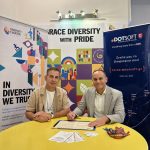
The Anti-Racism week included a series of events engaging different stakeholders and furthered with a Business Breakfast held at the Hilton Malta in St Julian’s, bringing together public authorities, private organisations, civil society, and community groups under one roof. The event was organised by the Human Rights Directorate, in collaboration with the CORE Platform and the Malta Diversity & Inclusion Charter.The timing is significant. While anti-racism efforts have existed in Malta for years, this is the first time they have been united under a dedicated national week. The focus of this event was squarely on the private sector, with special attention given to signatories of the Malta Diversity & Inclusion Charter.
A National Action Plan in Motion
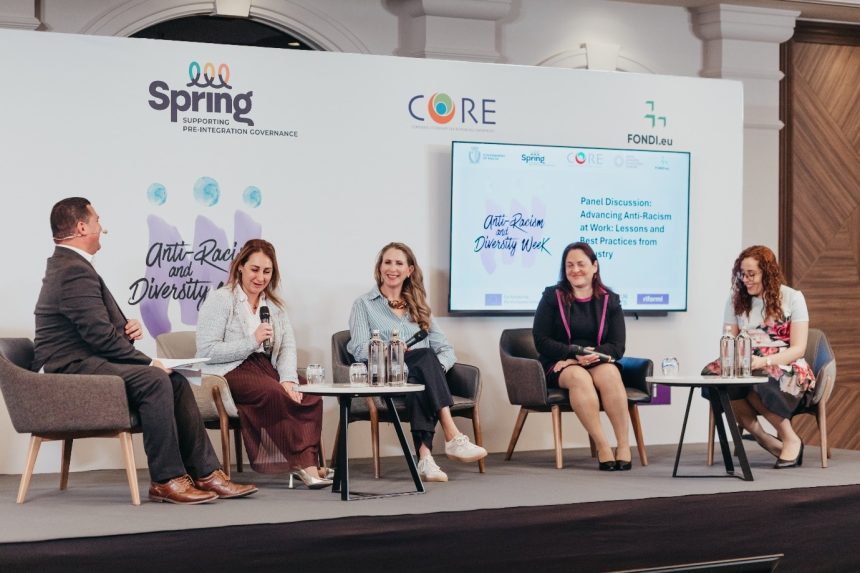
The Business Breakfast served as a working session as much as a celebration. Organisations shared best practices, explored collaboration opportunities, and discussed how to further support each other in strengthening diversity across Maltese workplaces. Central to the conversation was the Diversity Charter, a key initiative within Malta’s National Action Plan Against Racism 2025-2030. Attendees worked on developing practical tools to help the private sector move from good intentions to measurable change. “This week is not just about awareness,” a spokesperson for the Human Rights Directorate said. “It is about activation. We are building the practical tools needed to dismantle racism and foster genuine inclusion.”A series of workshops and a panel discussion – featuring Ms Kate De Cesare (Eden Leisure Group), Ms Sara Darmanin (DHL Express Malta), Ms Oriana Abela (Grant Thornton), and Ms Elaine Cordina (European Parliament Liaison Office Malta) – produced four actionable insights for Maltese businesses:
1. Use a universal language. In Malta’s diverse workplace landscape, English has emerged as the practical common ground. Organisations were urged to default to a language that leaves nobody behind, particularly in mixed-group settings.
2. Let employees shape the social calendar. A simple but powerful idea: ask staff what music they enjoy at company events. From Maltese folk to Afrobeats to classical Indian music, small gestures send a clear signal of belonging.
3. Celebrate the full calendar of traditions. Beyond Malta’s Roman Catholic public holidays, employers were encouraged to acknowledge Diwali, Eid, Orthodox Easter, Lunar New Year, and other significant occasions.
4. Offer flexible holidays. The most tangible proposal to emerge from the breakfast was allowing employees to exchange a Maltese public holiday for their own religious or cultural equivalent – for example, working on Roman Catholic Good Friday and taking leave instead on Orthodox Good Friday.“This is not about removing rights or complicating HR systems,” organisers noted. “It is about recognising that flexibility, thoughtfully applied, is one of the most tangible expressions of respect for your people.”