



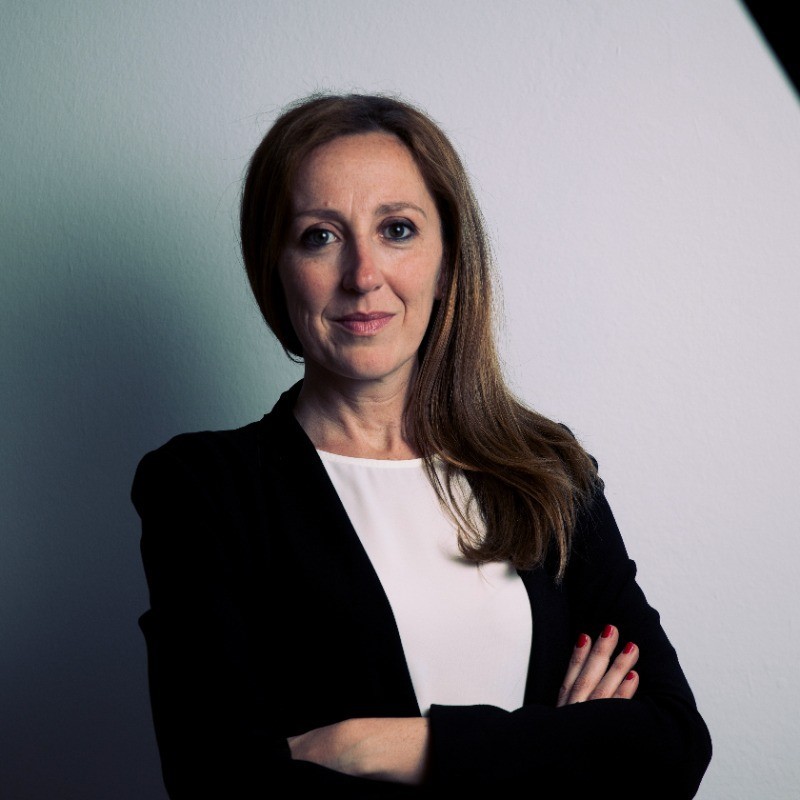
Patrizia Giorgio, Program Manager at Fondazione Sodalitas ETS, has been working for years in the field of Diversity & Inclusion, with a strong focus on promoting equality and creating fairer and more inclusive organizations. Her professional background, including extensive experience in building partnerships between the business and nonprofit sectors, has given her a deep understanding of the barriers and inequalities that often remain invisible, yet can significantly affect people’s opportunities and professional development.
At Fondazione Sodalitas, Giorgio is actively involved in initiatives that connect diversity with sustainable development and responsible business. A particularly important part of her work has been her contribution to the Italian Diversity Charter, promoted by Fondazione Sodalitas, which encourages companies and organizations to turn the principles of diversity and equal opportunities into concrete policies and everyday practices.
At a time when Diversity & Inclusion is becoming increasingly central to the way organizations think about sustainability, innovation and competitiveness, Patrizia Giorgio discusses the progress that has been made, the challenges that remain and the importance of moving beyond declarations towards meaningful, measurable action. She also reflects on Italy’s progress, the role of Europe and the opportunities and risks that artificial intelligence brings to inclusion.
What led you to pursue a professional career in Diversity and Inclusion? Was there any personal experience or event that influenced this choice?
My commitment to Diversity & Inclusion developed progressively through my professional experience and through the conviction that organizations have a major role to play in creating a more equitable society. There was no single personal experience or event that influenced me. I think that diversity and inclusion have always been part of who I am and of the way I behave and relate to others. At the beginning, gender equality was the issue I felt closest to and naturally paid the most attention to. Over time, however, I came to understand that every dimension of diversity matters, and I decided to focus more broadly on Diversity & Inclusion.
Another important element was my professional background. From the beginning of my career, I have worked on partnerships between the profit and nonprofit sectors. This gave me the opportunity to gain a deeper understanding of the disadvantages and barriers that some people face simply because of their personal characteristics or circumstances. This made me increasingly interested in understanding how organizations can remove the barriers—often invisible—that prevent people from expressing their full potential.
When you started, did you believe that diversity would become such an important issue for businesses and society?
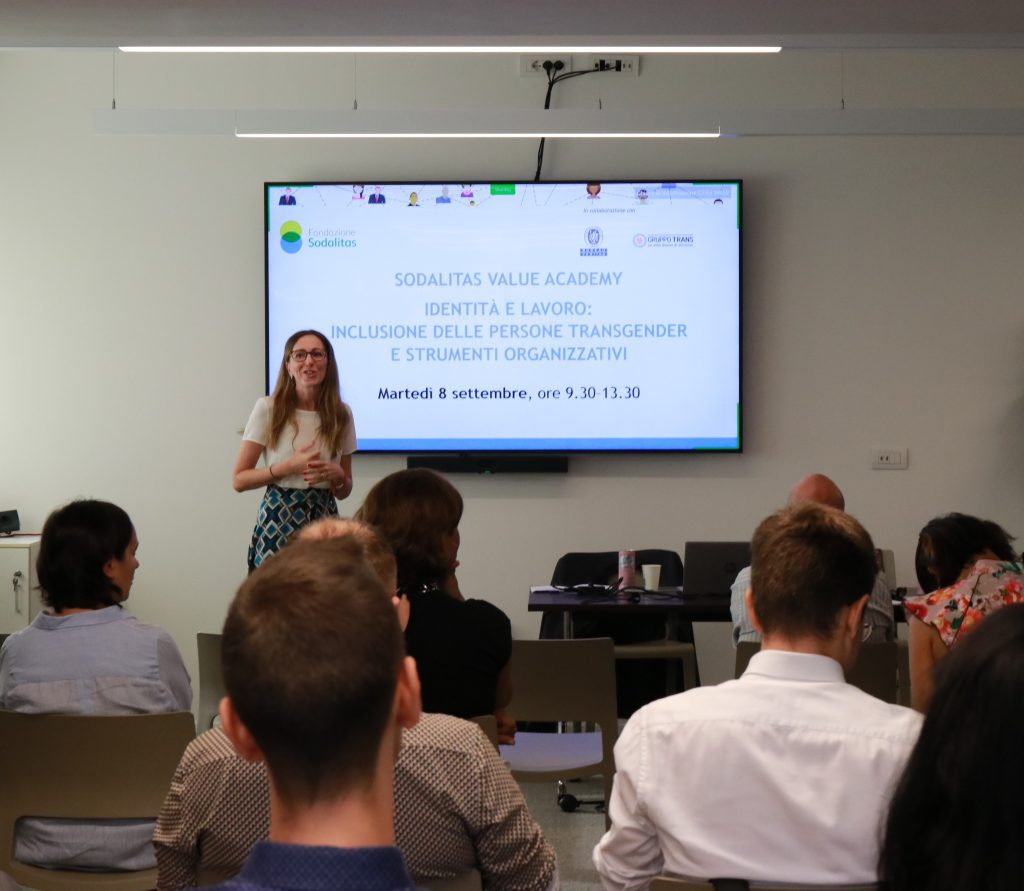
Not in this way, and certainly not across all these areas. When I started working on these issues, Diversity & Inclusion in general was much less central to the business agenda. The focus was mainly on specific areas, such as gender equality or, in Italy, disability inclusion, also because we have specific legislation requiring companies to hire people with disabilities.
Over time, the perspective has broadened. What has changed is the recognition that diversity is closely connected to business sustainability, innovation and competitiveness—and that this is true across all dimensions of diversity, not just gender. At the same time, I think we should not take this progress for granted. The current context reminds us that advances in Diversity & Inclusion can never be considered irreversible. This makes it even more important for companies to remain committed and to continue turning awareness into concrete action.
What have been the biggest challenges you have encountered along the way?
One of the biggest challenges has been moving from awareness to action. It is relatively easy to agree that diversity is important. It is much more difficult to translate that principle into everyday decisions. Measuring progress also remains a challenge. What is not measured can easily become a declaration of intent rather than a real organizational priority.
How do you respond to criticism that diversity policies are simply a form of “corporate image”?
I would say that this criticism is sometimes justified—but it should not lead us to conclude that Diversity & Inclusion policies are simply about corporate image. If diversity is used only for communication purposes, without changing policies, processes and behaviours, people will quickly recognize the gap. In that case, it can actually damage trust and credibility.
This is why it is so important to move beyond statements and commitments and focus on concrete actions and practices. Companies need to create an inclusive working environment through the way they recruit, develop and promote people, the way they organize work, and the way managers lead their teams.
For me, the real proof of commitment is not what a company says about Diversity & Inclusion, but what people actually experience every day in the workplace.
What is the most difficult mindset change that organizations are required to make?
The most difficult change is moving from seeing diversity as a “problem to manage” to seeing it as a resource. This is why I believe it is also important to find better ways to measure the impact of Diversity & Inclusion actions on the business. If we want D&I to become a real strategic priority, we need to be able to demonstrate not only its social value, but also how inclusion can contribute to innovation, talent attraction and retention, employee engagement and, ultimately, business performance.
The real mindset change is therefore to stop considering D&I as something separate from the business and to recognize it as part of good and sustainable management.
What project or initiative do you consider the most important in your career so far?
The initiative that I consider particularly important is my work with the Italian Diversity Charter, promoted by Fondazione Sodalitas. What makes the Charter particularly meaningful to me is its ability to bring together not only companies, but organizations more broadly, around a shared commitment to diversity and equal opportunities, while encouraging them to translate these principles into concrete organizational practices.
I particularly value the fact that it has created a community and a network where organizations can learn from one another, share experiences and challenges, and progressively raise the level of ambition.
Can you share a story that made you feel your work truly changed people’s lives?
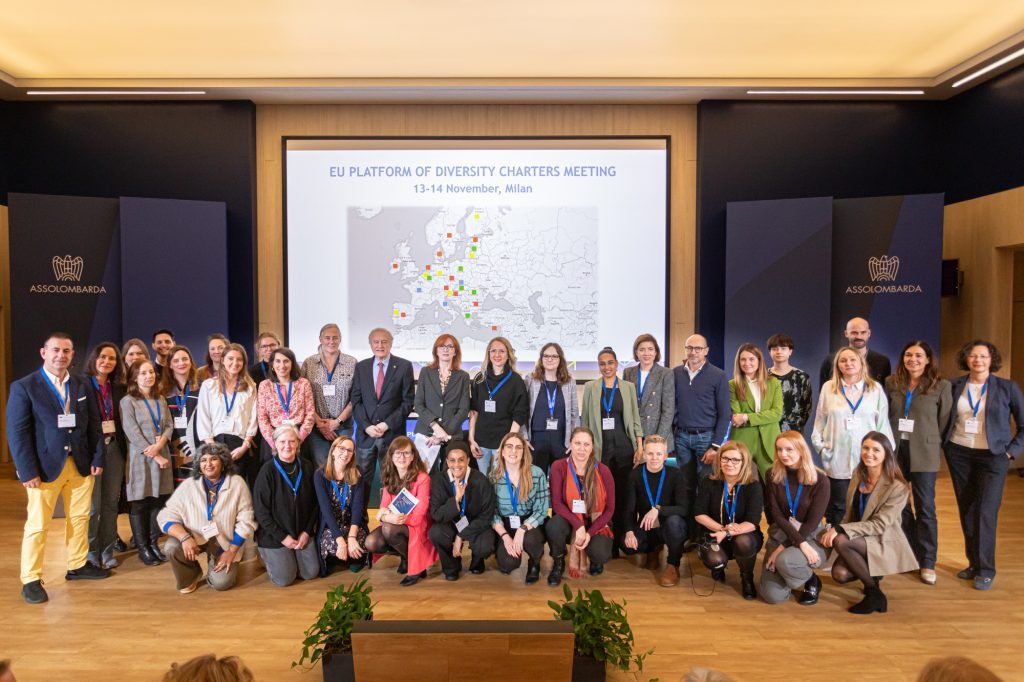
It is not just one single story. For me, these moments happen when I support our member organizations or give them the opportunity to join us at European events and exchanges. Every time, I see a sense of recognition in their words: they realize that they are not alone, that other organizations are facing similar challenges, and that there are people and networks they can learn from and work with.
What is particularly rewarding is seeing them come back with new ideas, greater confidence and positive energy—the feeling that they can actually make a difference. For me, this is a very important part of the impact of my work: helping organizations realize that change is possible and that they do not have to face the journey alone.
How do you assess Italy’s progress in the field of diversity and inclusion?
Italy has made significant progress, particularly in terms of awareness. Diversity & Inclusion are now much more present in the public debate and on the agendas of many companies than they were in the past. At the moment, I would say that the business community is more advanced than other areas of our country. Companies are leading the debate, sharing their experiences and developing new practices, and I think this is a very positive development.
At the same time, we would like to see other areas of society becoming more committed to these issues as well. Diversity & Inclusion cannot be the responsibility of businesses alone. We need a broader commitment involving institutions, schools, universities, civil society and society as a whole.
The progress made by companies can be an important driver of change, but the real challenge is to make this change more widespread and deeply rooted across society.
Which issues still remain a challenge?
Several challenges unfortunately remain. In Italy, gender equality is still a major issue, particularly when we look at leadership positions, pay gaps and the unequal distribution of care responsibilities.
Another important challenge is the intersection of different forms of diversity. People do not experience gender, age, disability, ethnicity, social background or other dimensions of diversity separately. These dimensions can intersect and create very different experiences and barriers.
Finally, we need to ensure that inclusion remains a priority in difficult economic times. D&I should not be considered an initiative that organizations can afford only when conditions are favourable. It is part of responsible and sustainable management.
What is the role of Europe in promoting diversity?
Europe has a crucial role to play because it can combine regulation, shared values and the exchange of good practices. European institutions can establish common standards and create a common framework, but Europe can also act as a laboratory for innovation. Its diversity is one of its greatest strengths, and European countries can learn enormously from one another by sharing experiences, solutions and approaches.
I also believe that Europe has an important role in keeping Diversity & Inclusion high on the agenda, particularly when progress cannot be taken for granted. A common European commitment can help ensure that equal opportunities remain a shared value across countries and organizations.
How does artificial intelligence impact inclusion policies?
Artificial intelligence creates both significant opportunities and significant risks for inclusion. We are currently exploring these issues together with our companies, trying to better understand both the opportunities and the potential risks. On the positive side, AI can help organizations identify patterns and inequalities that might otherwise remain invisible. It can support accessibility, personalize learning and potentially make some processes more efficient and objective.
But AI is not automatically neutral. If the data used to train systems reflects existing social inequalities or biases, AI can reproduce or even amplify them. This is particularly important when AI is used in recruitment, career development, performance evaluation or other decisions that can affect people’s opportunities.
For this reason, inclusion needs to be part of the conversation about AI from the beginning, not added afterwards. We need to think about inclusion when AI systems are designed, developed and implemented, so that technology can become a tool for greater equality rather than reproduce existing inequalities.
What advice would you give to companies that want to move from theory to practice?
My advice would be: try. Start doing something, even something small, and don’t be afraid to be bold. Start from your organization’s real situation rather than from a generic list of best practices. First, listen and collect data. Understand where inequalities or barriers actually exist.
Second, define a small number of clear priorities and measurable objectives. Here, I would really stress the importance of measurement. We need to be able to understand whether what we are doing is actually making a difference and, where possible, demonstrate its impact.
Third, involve leadership and, above all, middle management. They play a crucial role in translating commitments and policies into everyday behaviours and practices. So, don’t wait for the perfect plan. Start, experiment, measure what happens, learn from it, and keep going.