




Another decision raising concerns about the continued erosion of human rights and equality in Turkey has been added to the long list of restrictions faced by the country’s LGBTQ+ community.

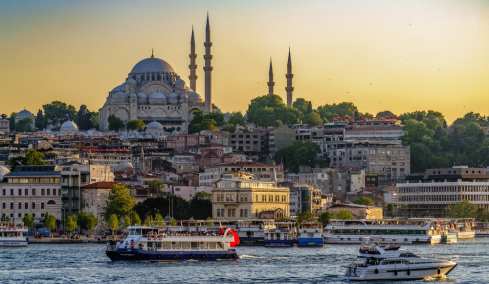
Turkish authorities refused to allow the luxury cruise ship Scarlet Lady, operated by Virgin Voyages, to dock during its 10-day Mediterranean voyage carrying approximately 1,900 passengers, the majority of whom were members of the LGBTQ+ community. As a result, the scheduled stops in Kuşadası and Istanbul were cancelled, forcing the organizers to revise the entire itinerary.
The cruise, organized by Atlantis Events, had departed from Athens with Venice as its final destination and was hosting travelers primarily from the United States, as well as from the United Kingdom, Canada, and Australia.
“Incompatible with Moral Values”
According to Atlantis Events CEO Rich Campbell, Turkish authorities justified their decision by stating that the voyage was specifically aimed at the LGBTQ+ community. As the company explained, Turkish officials described the trip as an activity “incompatible with the fabric of Turkish society and our moral values.”
Similar reports were published by the Turkish news outlet Bianet, which stated that the Office of the Governor of Aydın Province considered the presence of the cruise ship in Kuşadası to be “out of the question,” citing reasons related to the social structure and moral character of the region.
Regardless of the authorities’ wording, the essence remains the same: passengers were denied access to Turkish ports because of the identity of the travelers and the nature of the event in which they were participating. This practice raises serious concerns regarding respect for the principles of equal treatment and non-discrimination.
Another Episode in the Systematic Targeting of the LGBTQ+ Community
This decision is not an isolated incident. In recent years, Turkey has adopted an increasingly hostile stance toward LGBTQ+ people.
Pride marches have been systematically banned in many cities since 2015, events have been cancelled, civil society organizations have come under increasing pressure, and government officials have frequently used rhetoric portraying the LGBTQ+ community as a threat to the family and to traditional values.
During the same period, Turkish media also reported that authorities ordered the closure of Tek Yön, one of Istanbul’s oldest LGBTQ+ clubs, citing administrative violations, at a time that many human rights organizations consider indicative of growing pressure on LGBTQ+ spaces.
Legality Without Genuine Equality
Although same-sex relationships have been legal in Turkey since 1858, the country still fails to provide meaningful legal protection for LGBTQ+ people.
Same-sex marriage and civil unions are not legally recognized, there is no comprehensive anti-discrimination legislation covering sexual orientation or gender identity, and human rights organizations have repeatedly denounced the worsening climate facing the LGBTQ+ community.
The decision to deny docking rights to an international cruise simply because it was aimed at LGBTQ+ travelers sends yet another message of exclusion. At a time when equality, freedom of expression, and protection from discrimination are recognized as fundamental human rights, decisions such as this reinforce the isolation and stigmatization of an entire community instead of promoting respect for diversity and human dignity.