





A photograph by renowned photographer Annie Leibovitz, created as part of the campaign for the 2026 FIFA World Cup, has sparked an intense public debate about how visual aesthetics can shape the representation of people, countries, and cultures.
The image depicts Mexican international footballers Raúl Jiménez, Johan Vásquez, and Julián Quiñones on a dusty football pitch at sunset. However, what drew the strongest reactions was not the subject of the photograph itself, but its pronounced yellow-sepia color grading—particularly because the corresponding portraits of the United States and Canadian teams feature more neutral, natural color tones.
When Aesthetics Carry Cultural Meaning
In cinema, advertising, and photography, color choices are more than just an aesthetic tool. They often convey cultural codes and influence how audiences perceive a place or a society.
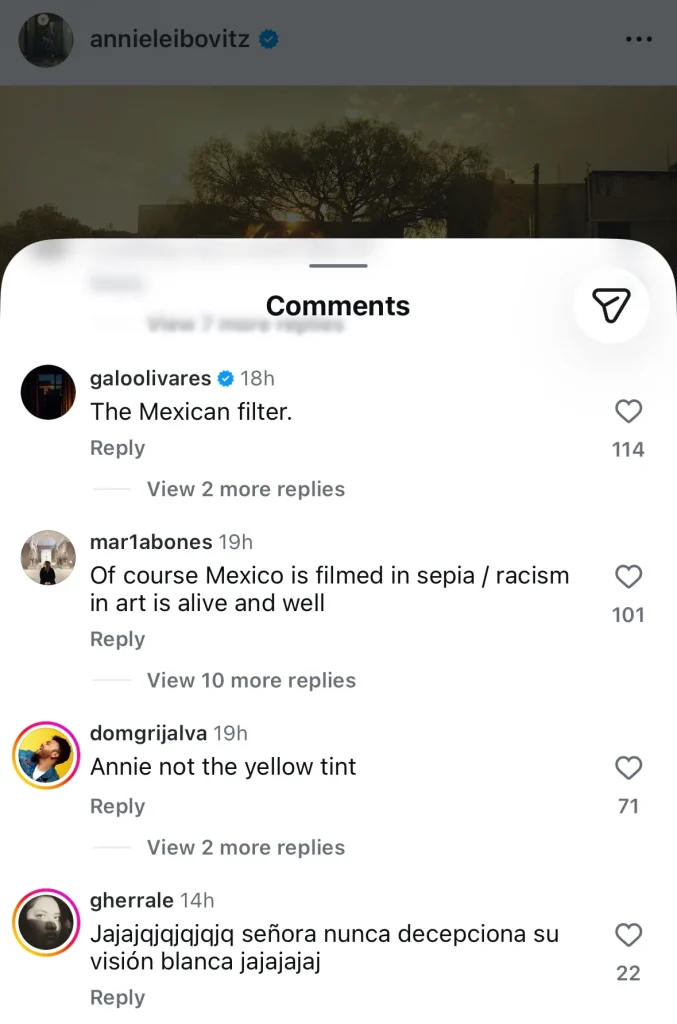
For this reason, many social media users associated the photograph with the so-called «Mexican Filter"—a visual style that Hollywood has used for years to portray Mexico and other Latin American countries through dusty, yellow-tinted color grading.
Critics of this practice argue that its repeated use creates visual associations linking certain regions of the world with poverty, neglect, violence, or underdevelopment. In other words, an aesthetic choice can become a vehicle for stereotypes, even when that is not the creator’s intention.
Different Perspectives
Not everyone agreed with the criticism. Several commentators pointed out that the photograph was taken at sunset, a time of day that naturally produces warm golden tones. They also argued that there is insufficient evidence to conclude that the photographer intended to reinforce stereotypes.
However, for many professionals in photography, color grading, and visual communication, the issue is not solely about intent but about impact. When a particular visual style has been associated with stereotypical representations for decades, repeating it can reinforce those same perceptions, even unconsciously.
Representation Is Never Neutral
These discussions are part of a broader conversation about inclusive representation in the media and the arts.
Images shape perceptions. The way people are lit, the colors that are chosen, the settings that are created, and the way different countries are portrayed all influence our collective understanding of who is perceived as «familiar," «modern," or «developed," and who is instead framed as «exotic" or «other."
For this reason, the debate surrounding Leibovitz’s photograph extends beyond artistic criticism. It concerns the ways in which image-makers can either reinforce or challenge stereotypes that have been historically shaped through colonial perspectives and Western narratives.
From Intention to Impact
Within the public conversation on diversity and inclusion, one question continues to emerge: Is the absence of harmful intent enough to rule out exclusion or discrimination?
This case suggests that the answer is far from straightforward. Increasingly, the discussion is shifting away from «What did the creator intend?" toward «How is the work experienced by the communities it represents?"
At a time when visibility, fair representation, and inclusion are at the heart of public discourse, even color grading can become the starting point for a meaningful conversation about how we see others—and how we choose to portray them.