



By Kyriaki Papayatzoglou
Donald Trump continues to shape a political agenda that is not limited to the international stage but extends deeply into the domestic social sphere. On the one hand, he adopts a strongly bellicose rhetoric and strategy toward countries such as Iran, fueling a climate of tension and confrontation. On the other hand, it maintains an uncompromisingly hardline stance toward the rights of LGBTQI individuals, as well as toward those who publicly defend them.
A telling example is the recent incident on Brian Kilmeade’s show, where a seemingly routine political question escalated into a fierce attack. Kilmeade asked Trump if he had decided whom he would support in the Republican primary in Texas: Attorney General Ken Paxton or incumbent Senator John Cornyn. Both politicians have expressed views that oppose the rights of the LGBTQ+ community, a fact that already provides a clear ideological framework for the discussion.
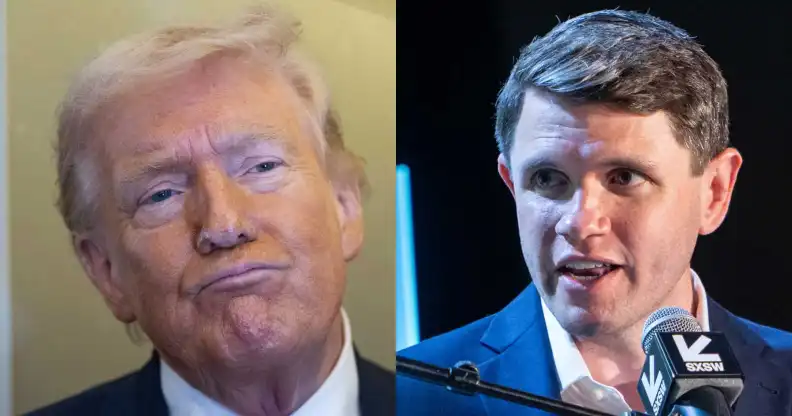
But instead of answering the question directly, Trump shifted the conversation elsewhere, choosing to target Democratic candidate James Talarico. This choice was no accident: rather than take a stance on two figures from his own party, he preferred to attack an opponent, focusing not on policy proposals but on issues of identity.
His reference to Talarico’s earlier statement that “God is non-binary” was used as a pretext for broader disparaging rhetoric. With phrases such as “an insult to Jesus” and characterizations that portray him as “out of touch with reality,” Trump attempted to turn a theological or philosophical view into a tool for political attack. Thus, the discussion shifted from the substance of political choices to a highly charged ideological confrontation.
This incident reveals something deeper: a strategy based on shifting the public debate from specific policy positions to issues that deeply divide society. Instead of addressing which of the two Republicans would receive support, attention shifted to an attack on a politician who expresses more inclusive views on LGBTQI individuals.
In this context, Trump’s stance appears consistent: whether it concerns foreign policy and tensions with countries like Iran, or domestic social issues, the choice is often to exacerbate rather than bridge differences. And when not only minorities but also those who support them come under fire, the political message takes on broader and more alarming implications for social cohesion.