



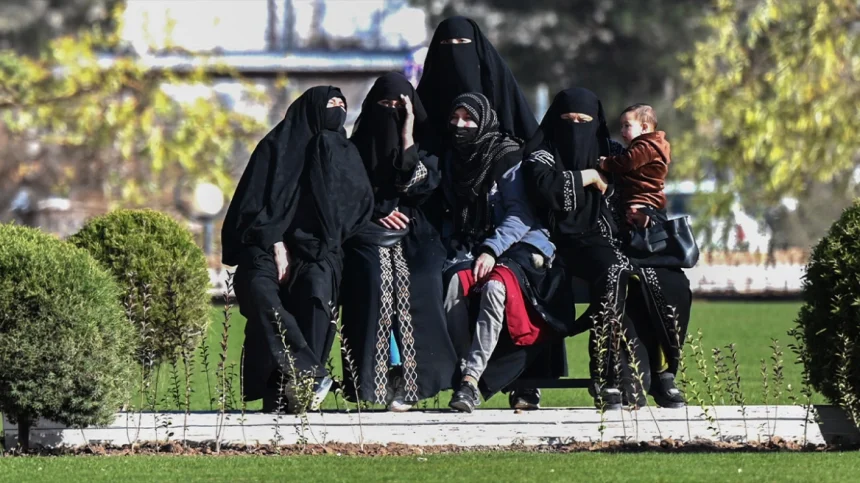
The passing of the new law by the Taliban regime in Afghanistan is one of the darkest institutional setbacks in recent years for human rights, diversity, and inclusion. At a time when the world is trying, albeit slowly, to build societies based on equality and respect, this legal framework openly legitimises violence, discrimination and gender oppression.
The law provides for the death penalty for “unnatural” sexual relations, targeting LGBTQI+ individuals and condemning diversity as a crime. At the same time, it allows men to use physical violence against their wives, as long as they do not cause broken bones or visible, permanent injuries — a formulation that turns violence into an “acceptable” tool of power within the home itself. The message is clear: women are not treated as equal persons with rights, but as subjects of control.
According to human rights organizations, this law makes it even more unlikely that women will seek justice in an already stifling environment where their testimony carries less weight than that of a man and their daily lives are restricted by strict rules of surveillance and exclusion. UNICEF has pointed out that over two million girls and young women have been excluded from secondary and tertiary education, deprived of their fundamental right to knowledge and personal development.
The UN High Commissioner for Human Rights, Volker Türk, described Afghanistan as a “graveyard for human rights,” warning that the institutional framework being developed is reminiscent of a system of segregation and institutionalized discrimination based on gender. Women and girls experience a form of gender-based oppression that amounts to persecution.
For a website that promotes diversity and inclusion, the stance towards such a law cannot be neutral. Violence is not a “cultural peculiarity.” The violation of rights is not an “interpretation of tradition.” Gender equality, freedom of identity and sexual orientation, access to education and justice are not negotiable privileges — they are non-negotiable human rights.
In a world striving to become more inclusive, such legislative initiatives are a stark reminder that progress cannot be taken for granted. The international community, human rights organizations, and every voice that believes in dignity must continue to support women, girls, and LGBTQ+ people in Afghanistan.
Diversity is not a threat. Violence is. And in the face of institutionalized injustice, silence is not an option.