




By Anna Konstantinidi Apergi, Special Advisor – Diversity Charter Greece
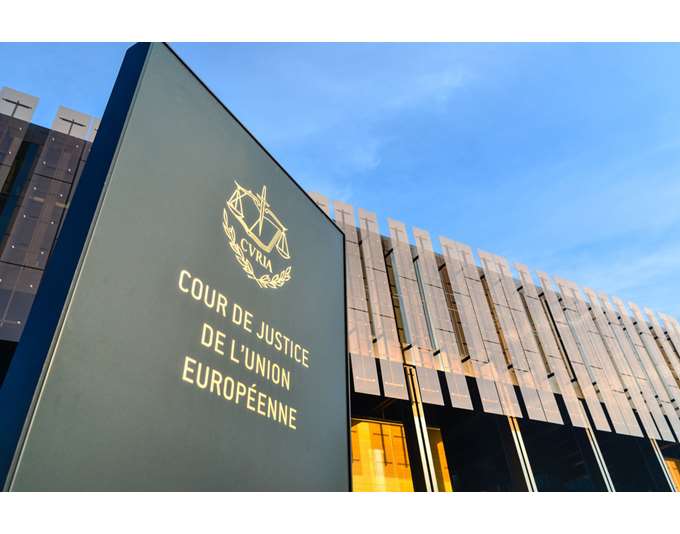
The landmark ruling by the Court of Justice of the European Union (CJEU) in Case C-43/24 Shipova marks a particularly significant development for human rights in the European Union.
In its ruling, the Court made it clear that EU member states are required to have functional procedures for the legal recognition of gender identity, particularly when the absence of such procedures hinders the exercise of the right to free movement and residence of Union citizens.
This decision represents another step forward in the protection of the rights of transgender people under European law and directly links the legal recognition of gender identity to the effective exercise of fundamental rights enshrined in the Treaties and the Charter of Fundamental Rights of the European Union. Rights of the European Union.
The Court of Justice was asked to determine whether a Member State’s refusal to legally recognize the gender identity of one of its citizens—who has exercised the right to move to and reside in another Member State—is consistent with EU law.
See also: Greece ranks first among European countries in criminal “conversion therapies.”
In its ruling, the CJEU emphasized that the right of EU citizens to move and reside freely, as enshrined in Article 21 of the Treaty on the Functioning of the European Union, may be substantially impeded when a person’s official documents do not correspond to their gender identity.
Identity documents and passports are essential tools for exercising European citizenship. A discrepancy between a person’s gender identity and the information recorded in civil registries and official public documents can create significant difficulties in everyday situations: from identity checks and cross-border travel to financial transactions, access to health services, or entering the labor market.
For this reason, the Court ruled that Member States must ensure that gender identity can be legally recognized so that their citizens can obtain identity documents, based on each person’s self-identification, that correspond to their actual identity.
This decision is not limited to the issue of free movement. The ECJ explicitly links the recognition of gender identity to the right to privacy, as enshrined in Article 7 of the Charter of Fundamental Rights of the European Union.
Furthermore, the ECJ wisely recalls the case law of the European Court of Human Rights, according to which states have a positive obligation to provide swift, transparent, and accessible procedures for the legal recognition of gender identity.
Σημαντική είναι και η επισήμανση του Δικαστηρίου ότι η ανοχή σε διακρίσεις που βασίζονται στη διαφορά μεταξύ “βιολογικού φύλου” και “κοινωνικού φύλου” της ταυτότητας φύλου δηλαδή, θα συνιστούσε παραβίαση της αξιοπρέπειας και της ελευθερίας των τρανς προσώπων.In this way, the Court places gender identity within the broader context of the protection of human dignity and personal autonomy, values that lie at the heart of European legal culture.
The case began with a transgender woman of Bulgarian origin who lives in Italy.
For nearly a decade, Bulgarian courts refused to recognize her gender and name on official documents.
This refusal is part of a broader institutional framework in Bulgaria, which became even more restrictive following the interpretive ruling by the country’s Supreme Court in 2023, according to which Bulgarian courts cannot approve any correction of registered gender, name, or personal identification number in civil registry records.
This practice has created a de facto blanket ban on the legal recognition of gender identity.
The Court of Justice ruled that such a situation is incompatible with EU law and emphasized that national courts must set aside national provisions or interpretations that conflict with EU law.
The significance of this decision goes beyond the individual case. Today, in some Member States, such as Hungary, Bulgaria, and Slovakia, legal recognition of gender identity has become extremely difficult or practically impossible.
The Court clarifies that the complete absence of such a procedure is incompatible with European Union law, particularly when it affects the exercise of fundamental rights.
The ruling thus reinforces the view that legal recognition of gender identity is not merely an administrative procedure, but a fundamental prerequisite for the equal participation of transgender individuals in social and professional life.
The judgment in Case C-43/24 Shipova serves as a reminder that European integration is inextricably linked to the protection of human dignity and fundamental rights.
And especially today, at a time when the rights of LGBTQI+ people are being challenged, the Court of Justice of the European Union reaffirms that equality and the freedom of personal identity are an integral part of the European legal order.
The message of European law is clear: equality and respect for the identity of our fellow human beings cannot be conditional.