

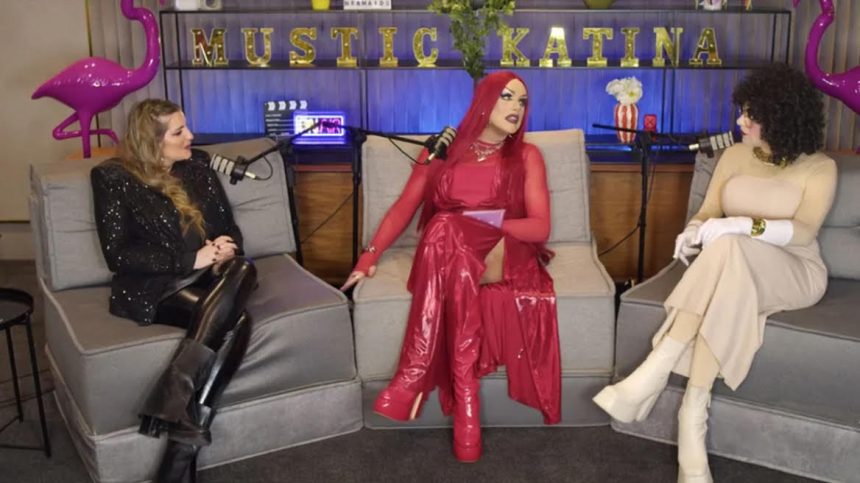
Maria Kitsou made a deeply moving and revealing confession, speaking openly about the traumas of her childhood, the domestic violence she experienced, and her long journey toward personal redemption. Through her interview on the “Rainbow Mermaids” vidcast, the actress gave voice to an experience that affects many people but often remains unspoken.
With honest and emotional words, she described an incident that left a lasting mark on her: a violent attack by her father, which even led to a police report. As she noted, at that time it was not an isolated incident, but part of a daily life filled with fear and oppression. Despite the shock, she admits that she had by then “gotten used to” such situations, a fact that reflects the depth of the trauma.
Her need to escape the toxic environment was intense from a young age. She tried to leave home as early as age 17, seeking support from relatives, but was met with indifference and skepticism. Instead of protection, she was met with justifications for the abuse she was experiencing. Eventually, she managed to leave later on, finding temporary refuge with a cousin.
At a time when support organizations like The Smile of the Child were not yet available, she was forced to draw strength from within herself and from those closest to her. As she points out, what helped her endure was that she never hid what she was going through. She spoke openly to her friends, shared her pain, and didn’t suppress it. In contrast, as she notes, her brother, who didn’t express himself, struggled even more.
“I am a survivor of trauma and abuse,” she says today, fully aware of the journey she has taken. She acknowledges that her life could have taken a completely different turn, but she managed to escape the abusive circumstances and forge her own path.
The most emotional moment of the interview came when she was asked to address the little Maria she once was. With tears in her eyes, she said, “I would tell her that it will pass and it won’t always be this way.” A simple yet deeply cathartic phrase that reflects the need of every child experiencing abuse: to believe that there is a way out.
In the interview, she also spoke about her battle with fibromyalgia, a condition that significantly affects her daily life. As she explains, the diagnosis came after the pandemic and is accompanied by intense pain and exhaustion. She emphasized the crucial role of mental health in managing the illness, noting that psychotherapy has been an essential tool for her: “That’s where I really dove deep,” she said characteristically.
Maria Kitsou’s story is not merely a personal account. It is a powerful reminder of the importance of visibility, support, and empathy. In a world that is gradually making room for diversity and inclusion, such voices serve as beacons—showing that even in the darkness, strength, hope, and a new beginning can emerge.