




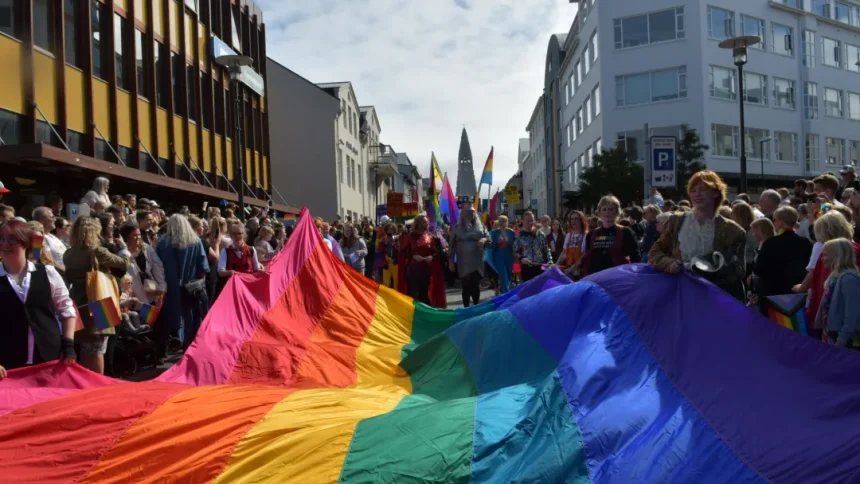
Iceland has once again secured the top position in the 2026 Trans Rights Index and Map, highlighting its continued commitment to advancing the rights and inclusion of transgender and non-binary people.
Published annually by Transgender Europe (TGEU) in partnership with ILGA-Europe, the Index evaluates legal protections and policy measures affecting trans and non-binary individuals across 54 countries in Europe and Central Asia. The assessment covers key areas such as legal gender recognition, asylum protections, anti-discrimination measures, healthcare access, hate crime legislation, and family rights.
With a score of 30 out of 32 indicators, Iceland remains the highest-ranked country for the third consecutive year. The country achieved full marks in most categories, demonstrating a strong legal and policy framework that supports gender diversity and inclusion.
Malta followed in second place with 28 points, while Spain ranked third with 27.18 points. Belgium, Norway, and Germany also featured among the leading countries, reflecting ongoing efforts to strengthen protections for transgender and non-binary communities across parts of Europe.
A notable finding of the report is that Austria, Germany, Iceland, and Malta are currently the only countries in the region that fully meet the criteria for legal recognition of non-binary people.
According to TGEU, the 2026 edition reveals several legal developments across the region. However, many of these advances have resulted from sustained advocacy by civil society organizations and strategic court decisions rather than proactive governmental initiatives.
At the lower end of the ranking, several countries continue to provide little or no legal protection for transgender people. Russia scored zero points, while a number of Central Asian and Eastern European countries recorded only minimal compliance with the Index’s indicators.
The report also highlights broader regional trends. Thirty-eight of the 54 countries reviewed currently provide legal or administrative pathways for legal gender recognition, while eight countries offer explicit international protection on the grounds of gender identity for asylum seekers. In addition, nine countries have accessible legal gender recognition procedures available to refugees.
The findings underline both the progress achieved and the challenges that remain. As discussions around diversity, equity, and inclusion continue across Europe, the Index serves as an important reminder that legal recognition, protection from discrimination, and equal access to rights remain fundamental components of an inclusive society.
For organizations, policymakers, and diversity practitioners, the report provides valuable insights into how legal frameworks can contribute to creating environments where transgender and non-binary individuals can participate fully and safely in social, professional, and public life.