




By Kyriaki Papagiatzoglou
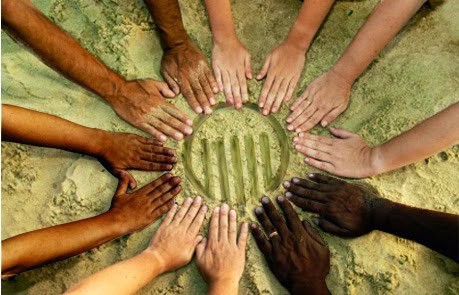
Football often serves as a mirror of society. In France, the national team represents not only the country’s sporting achievements but also its modern, multicultural identity. Yet this very diversity has increasingly become the focus of intense political debate.
Following France’s campaign at the 2026 FIFA World Cup, public discussion surrounding the composition of the national team has once again intensified. Players from diverse ethnic and cultural backgrounds are viewed by many as a reflection of a modern, inclusive France. Others, however, have used the team’s diversity to promote anti-immigration and nationalist narratives.
France captain Kylian Mbappé has repeatedly spoken out against the rise of the far right and against political rhetoric that targets diversity. In an interview with Vanity Fair, he warned about the consequences his country could face if political forces that thrive on division and exclusion were to gain power, stressing that he understands all too well what such a development could mean for French society.
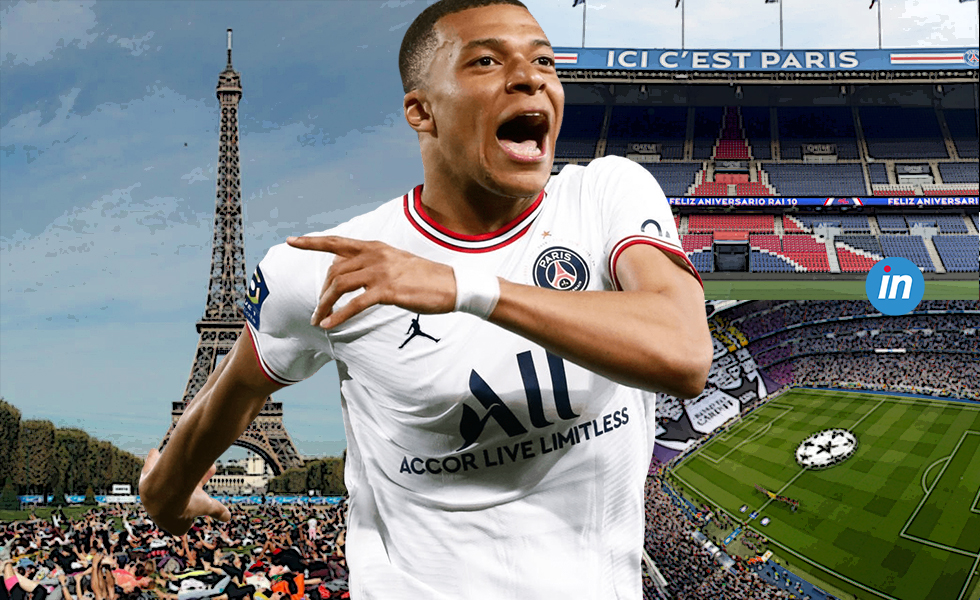
His remarks extend far beyond football. They reflect a broader social reality in which multiculturalism is increasingly being used as a political instrument. Instead of being recognized as an integral part of contemporary French identity, it is often exploited by certain political movements to deepen polarization and mobilize voters.
This is not the first time the French national football team has found itself at the center of such a debate. From the historic 1998 World Cup-winning squad, celebrated under the slogan «Black-Blanc-Beur," to today’s generation of players, every major sporting success has been accompanied by renewed public discussions about who is considered «truly French."
The fact that the overwhelming majority of France’s international players were born in France has not always been enough to counter narratives portraying the team as «less French" because of the ethnic backgrounds or family origins of many of its players. In this way, heritage becomes a political symbol, while diversity itself turns into a battleground for competing ideologies.
France’s experience reflects a broader trend across Europe. During periods of political uncertainty and election campaigns, issues such as immigration, multiculturalism, and national identity frequently become central themes in political discourse. Public figures with significant influence, such as Kylian Mbappé, inevitably find themselves drawn into these debates, whether they seek that role or not.
For those who advocate diversity and inclusion, the French national team serves as a powerful reminder that social diversity is not a political slogan but an everyday reality. Athletes should be judged by their performances on the field, not by the color of their skin, their religion, or their family’s origins.
Multiculturalism can be a source of social cohesion, innovation, and cultural richness. However, when it is used as a tool for political confrontation or electoral strategy, it risks reinforcing divisions rather than encouraging meaningful dialogue. In this context, the public stance taken by figures such as Kylian Mbappé highlights that defending equality, diversity, and social cohesion extends well beyond sport. It is ultimately about the values that shape democracy and peaceful coexistence in modern societies.