



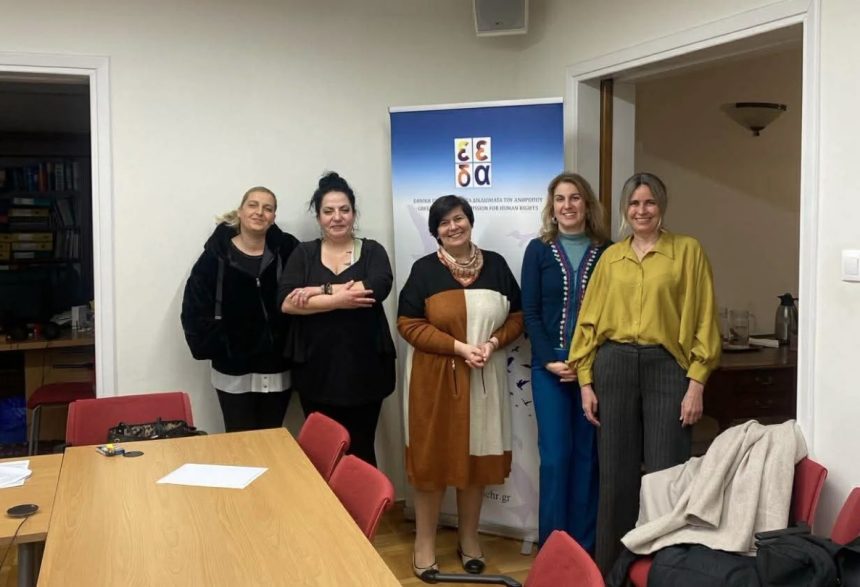
A hearing of organizations and individuals active in the field of gender equality was held on Wednesday, April 1, at the offices of the National Commission for Human Rights (NCHR) and via online participation by organizations, in collaboration with the General Secretariat for Equality and Human Rights of the Ministry of Social Cohesion and Family, with the aim of fostering dialogue on the National Action Plan for Gender Equality 2026-2030 (ESCHDIF) in order to design and establish a comprehensive and systematic framework of policies and measures that promote gender equality at all levels of society and the economy.
The hearing was moderated by the President of the National Commission for Gender Equality (NCGE), Professor Maria Gavouneli, with participation from Second Vice President Elli Varchalama, Scientific Associate Dr. Katerina Charokopou, and members of the National Commission. Representing the General Secretariat for Equality and Human Rights were General Secretary for Equality and Human Rights Katerina Patsogianni and officials from the Ministry.
The hearing was attended by individuals and representatives from approximately 20 civil society organizations with significant involvement in the field of gender equality and gender-based discrimination, who shared their experiences and expressed their views, focusing on the challenges and objectives of the new National Strategy for Gender Equality and the Elimination of Gender Discrimination, so that these may be taken into account by the relevant state agencies with a view to the effective formulation and implementation of the new strategy.
The discussion focused on the Plan’s six Priority Axes, which are broken down into strategic policy objectives: (A) preventing and combating gender-based/domestic violence, (B) combating gender stereotypes, (C) equal participation in public, social, and economic life, (D) quality and inclusive education, (E) integration of the gender dimension into all policies, (F) monitoring, documentation, and evaluation of equality policies.
The purpose of the dialogue between organizations, social partners, and the State is to ensure equal rights, equal opportunities, and equal treatment for all women, to eliminate structural inequalities, and to strengthen social justice and participation in all areas of public life.
We would like to take this opportunity to note that the National Commission, as a steadfast ally of the State, provides advice on the adoption of legislative, administrative, and other measures in accordance with the country’s international and European commitments to the promotion and protection of human rights, summons, at its discretion, persons to a hearing who may facilitate its work by presenting personal experiences or expressing opinions (Article 18(4) of Law 4780/2021).