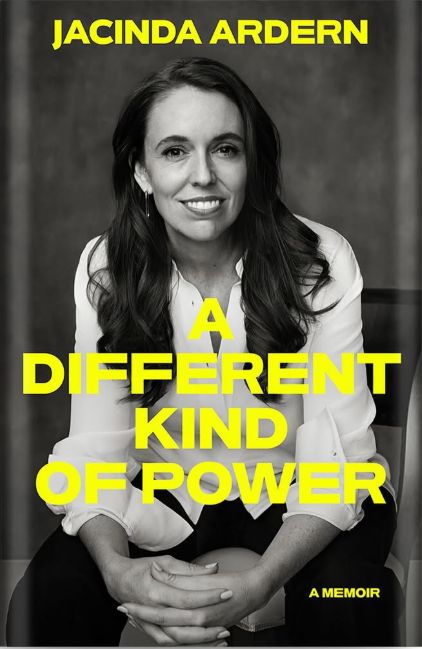




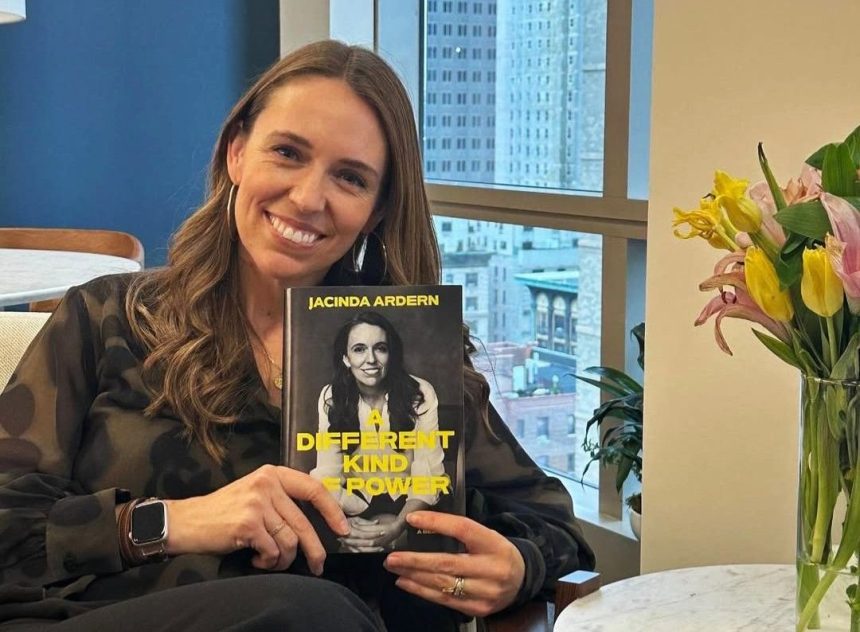
Jacinda Ardern , former Prime Minister of New Zealand, recently spoke to The New York Times to mark the release of her memoir, A Different Kind of Power . In the interview, she reflects on her political journey, emphasizes the importance of empathy in leadership, and discusses the challenges she faced during her tenure.
Her book, released June 3, 2025 by Penguin Books, offers a candid look at her experience as a leader, covering major events such as the Christchurch terrorist attacks, the COVID-19 pandemic, and her personal challenges, including imposter syndrome and a troubling medical diagnosis that led her to consider stepping down. Arder points out that leadership doesn’t have to be based solely on strength and determination, but can also incorporate kindness, empathy, and honesty. This message is central to both her interview and her book.
The following is the interview Jacinda Ardern gave to the New York Times
– We are so close to Harvard, which has recently been the focus of heated debate, and now you are releasing a book on kindness and empathy in leadership. How do these all connect?
I started writing the book after I left the prime ministership, in early to mid-2023. Although there were already difficulties in the world then, the situation today seems very different. So I understand the environment in which the book is being released. Nevertheless, I would have written it exactly the same, regardless of the circumstances. Even then, empathy, compassion and kindness in leadership were viewed with suspicion, as if they were naiveties – which is perhaps even more true today. But I reject that logic.
– How do you react to this attitude?
I think there’s a misconception. People assume that because a certain type of leadership is prevalent today, that means voters are already looking for it. I don’t think so. There are serious issues, like deep economic insecurity and uncertainty in an unstable world. Politicians can approach this situation either through fear and blame, or through the difficult but necessary effort to find real solutions. It would be wrong to say that people don’t want kindness and compassion in politics – and that they aren’t looking for a different approach. Citizens are not naive.
– How did the audience react to your performances on campus?
I’ve participated in public health forums and communication courses. What struck me was how much the idea that you bring to your leadership the qualities that you value as a person resonates. I often meet young people who are interested in politics and ask me if they will be “tough” enough to endure. I’ve heard that so many times. I tell them that I too remain “thin-skinned,” but that hasn’t stopped me from leading a country.
– In the book you say that you were afraid that your compassion would be perceived as weakness — and female weakness, at that.
I made the decision very early on to just be myself. In New Zealand, if you’re not authentic, they’ll pick up on it. The relationship with politicians is very direct. But that didn’t mean it was easy. There were times when I felt like I shouldn’t show my emotions. It wasn’t about me – it was about the situation, the victims, the circumstances. But at other times, I felt like it was right to show my human side. And I think that built people’s trust. Because, finally, they saw that I was human.
– Do you think the world now expects this style from female leaders?
I’m often asked if these traits are gendered. I’ve worked with many politicians – men and women – and I’ve seen empathy on both sides. I like to look at it through the lens of what we teach our children. If you ask a group of parents what values they want to instill in their children, you’ll hear the same things: to be kind, generous, courageous, compassionate. And yet, when we see these values in leaders, we see them as weaknesses?
– You describe in your book the intense pressure between what parts of yourself to show publicly and which ones to hide.
When I think back to those moments, it’s clear: I was only the second woman in the world to give birth while in office. I felt a burden – a need to prove that this was possible. That’s why I avoided showing anything that might make anyone doubt that I could be a mother and prime minister at the same time. But, at the same time, I didn’t want to present an image of a “Superhero” who does it all on her own. It wasn’t the truth.
– Is that why you think some people reacted when you returned from parental leave after just six weeks?
There may not have been a “right” answer to this. We had campaigned proudly to extend parental leave to six months. But I thought, “That’s for everyone – not me. I can’t be away from the role I was elected to for six months.” So I took six weeks. Honestly, it took me a long time to be able to stand up straight. I had a hunchback for a while and I don’t understand how some women go back to work earlier. It’s a health issue – especially when you’re an “older mother”, as I was. And by the way, why do we keep using that term? I included it in the book on purpose, because at some point someone has to say, “Time to find another word.”
Her interview was published on nytimes.com