
Adaptation of the Tourism Carrying Capacity Tool to support the sustainability of ecotourism strategies, plans, products, and services in the Mediterranean.
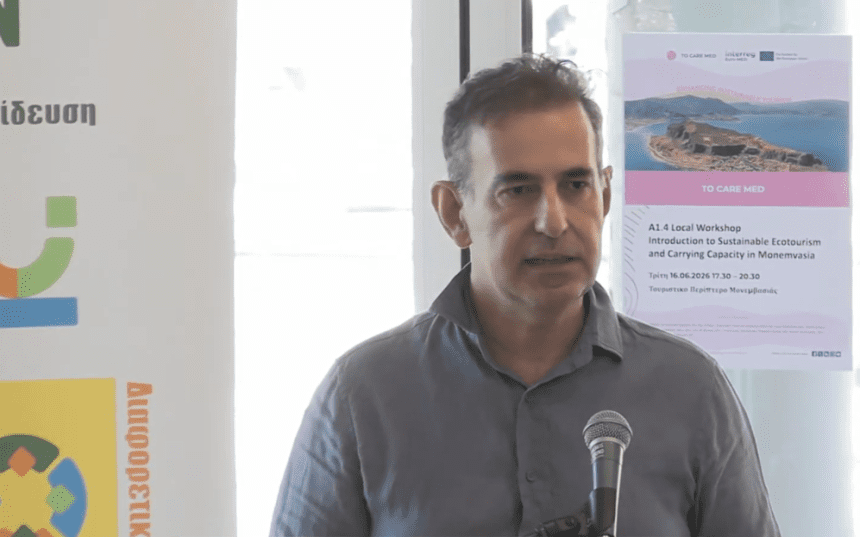
The Local Stakeholder Workshop was held as part of the TOCAREMED project, with the aim of bringing together representatives of local government, tourism professionals, hospitality providers, and representatives of the local community to discuss the sustainable tourism development of Monemvasia and identify opportunities to enhance the destination’s sustainability and competitiveness.
The workshop served as a vital forum for dialogue and the exchange of knowledge regarding the contemporary challenges facing tourism, best practices in sustainable tourism development, and the future prospects of Monemvasia as a major cultural and historical destination in the Mediterranean.
Opening Remarks
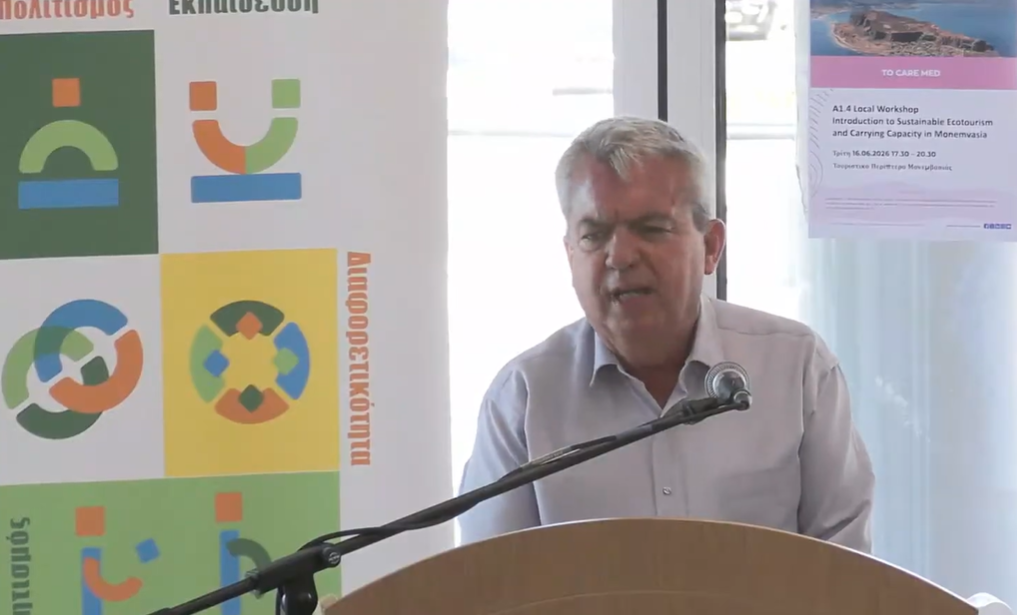
The event was opened by:
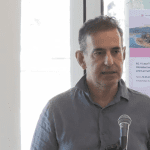
- Stavros Christakos, Deputy Mayor of the Municipal Unit of Monemvasia.
- Katerina Tsafatinou, Chair of the Tourism Committee of the Municipality of Monemvasia.
- Stavros Milionis, President of KEAN.
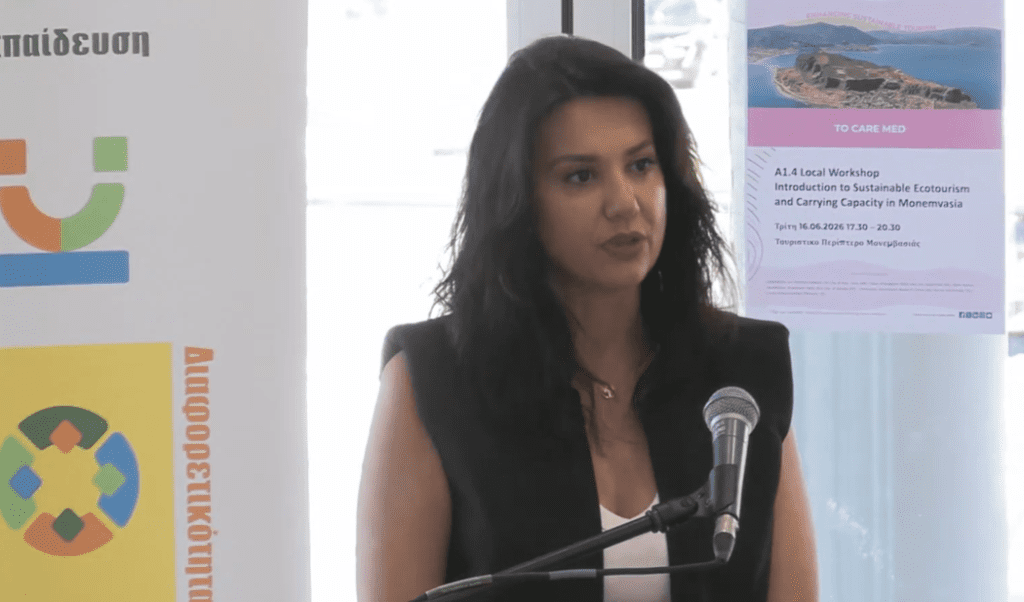
The speakers emphasized that sustainable tourism is a strategic priority for the future development of Monemvasia. At the same time, they stressed the need for close cooperation between local government, tourism businesses, residents, and civil society to ensure balanced tourism development that will protect the region’s cultural heritage and natural environment, while at the same time enhancing the visitor experience.
Presentation of the TO CARE MED Project
As part of the event, the TOCAREMED project was presented, along with its main objectives, expected results, and broader context of implementation in the Mediterranean.
The key points of the presentation were:
- The promotion of sustainable and responsible models of tourism development in Mediterranean destinations.
- Strengthening the resilience and competitiveness of tourist destinations.
- The protection of natural and cultural resources.
- Strengthening stakeholder engagement through Destination Working Groups (DWGs).
- Η υποστήριξη των τοπικών αρχών και των επαγγελματιών του τουρισμού στην ανάπτυξη πρακτικών λύσεων για τη βιώσιμη τουριστική ανάπτυξη.
Special mention was made of the role of the Destination Working Groups (DWGs), which were presented as a collaborative mechanism that facilitates stakeholder participation, the identification of local needs, and the joint planning of actions for more sustainable tourism.
Discussion: Challenges and Opportunities for Tourism in Monemvasia
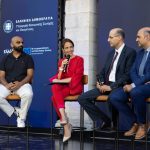
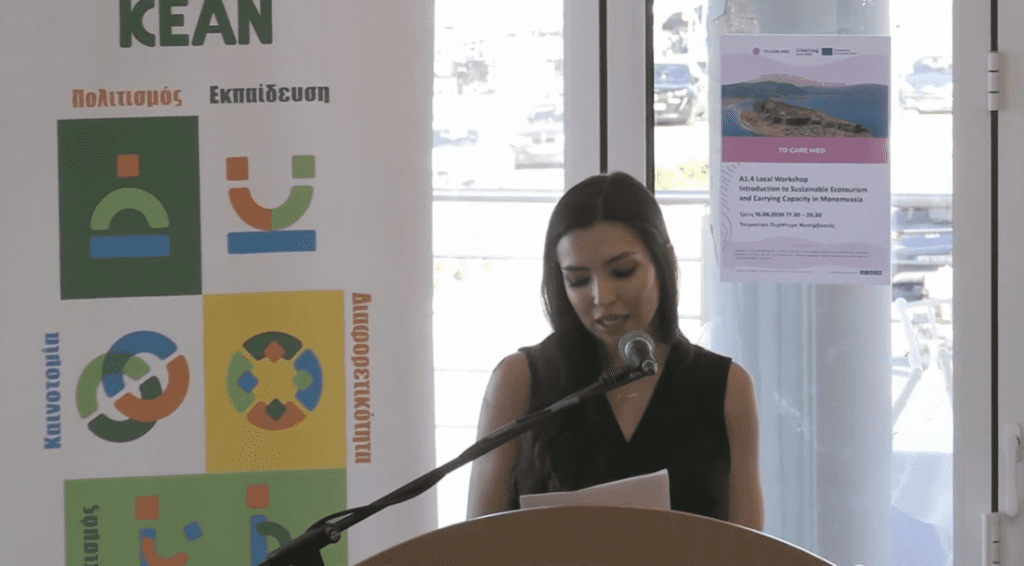
The discussion featured the participation of:
- Stavros Christakos, Deputy Mayor of the Municipal Unit of Monemvasia.
- Katerina Tsafatinou, Chair of the Tourism Committee of the Municipality of Monemvasia.
- Dimitris Giannisis, Member of the Tourism Committee.
The participants exchanged views on the current state of tourism in Monemvasia, highlighting both the significant prospects for growth and the key challenges the destination faces.
Key challenges that emerged
- The marked seasonality of tourism.
- Increased pressure on infrastructure during peak periods.
- Traffic management and accessibility issues.
- The rational management of water resources and the protection of the environment.
- The shortage of workers in the tourism industry.
- The need for stronger promotion and more effective tourism branding for Monemvasia.
- Balancing tourism development with the protection of cultural heritage and local identity.
Opportunities that emerged
- Ανάπτυξη πολιτιστικών και ιστορικών τουριστικών προϊόντων.
- Promoting local cuisine and agri-food experiences.
- Expansion of tourism activities outside the summer season.
- Development of hiking, nature-based, and experiential tourism.
- Strengthening cooperation between public authorities and private-sector entities.
- Utilizing digital tools for destination management and to better inform visitors.
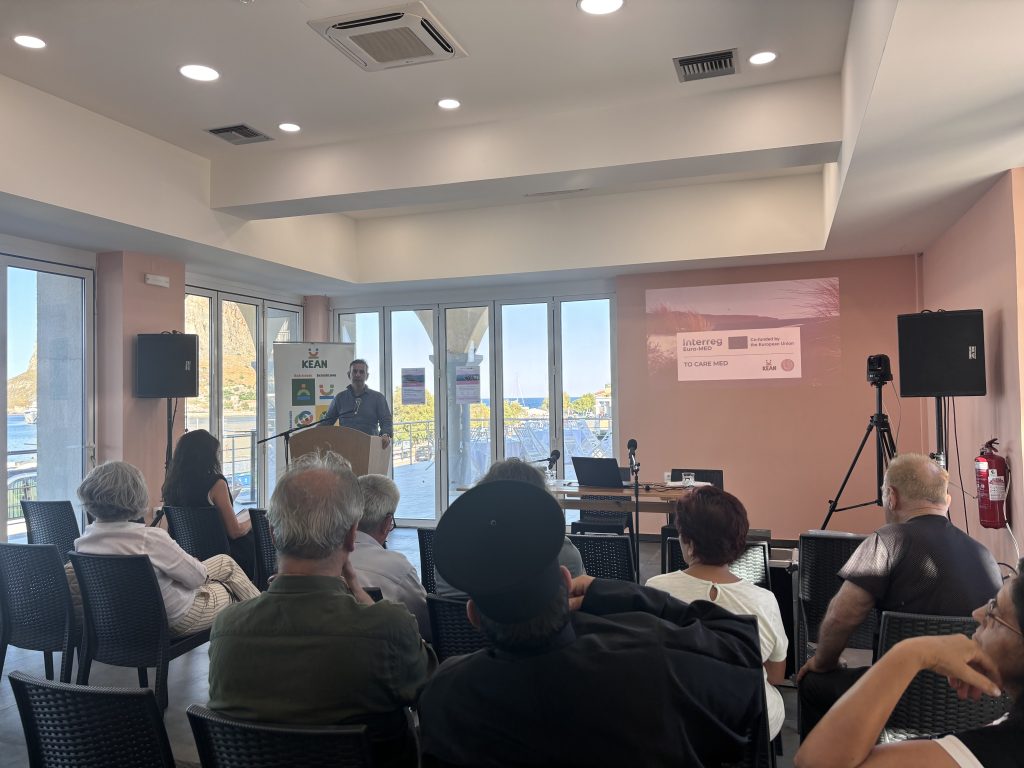
Discussion Workshop
The workshop gave participants the opportunity to engage in an open and interactive dialogue about the future of Monemvasia as a sustainable tourist destination. Representatives from local government, tourism businesses, hospitality businesses, and local community organizations exchanged views on the key priorities that should guide the destination’s future development.
The participants emphasized the importance of preserving Monemvasia’s unique character, while ensuring that tourism development remains compatible with the protection of the natural environment and the residents’ quality of life. Particular emphasis was placed on improving the management of natural resources, particularly with regard to water consumption, waste management, and the protection of coastal and natural ecosystems. All participants agreed that environmental sustainability must be an integral part of Monemvasia’s tourism strategy.
At the same time, the discussion highlighted the great importance of protecting the region’s rich cultural heritage. Participants acknowledged that Monemvasia’s historical identity and authenticity are its most important competitive advantages and should remain at the center of any future development efforts. Promoting local traditions, cultural events, and authentic experiences for visitors was recognized as a significant opportunity to further enhance the destination’s appeal.
Key Findings
The workshop demonstrated that there is a shared understanding among all stakeholders that Monemvasia’s future competitiveness depends on the adoption of a sustainable model of tourism development, one that balances economic growth with the protection of the natural environment and cultural heritage.
The participants agreed that the destination should focus on enhancing the quality and value of the visitor experience, rather than solely on increasing visitor numbers. Preserving the authenticity of Monemvasia, protecting its cultural heritage, and safeguarding its natural environment were recognized as essential prerequisites for the destination’s long-term sustainability.
At the same time, the need to strengthen cooperation among local government, businesses in the tourism sector, social organizations, and residents was highlighted. Participants emphasized that sustainable tourism development can only be achieved through a shared vision and coordinated actions by all stakeholders.
Another important conclusion was the need to enrich and diversify the tourism product by developing cultural tourism, gastronomy, outdoor activities, and experiential tourism, with the aim of extending the tourist season beyond the summer months.
In addition, the participants emphasized the importance of utilizing data and modern destination management tools, which can contribute to evidence-based decision-making and strengthen Monemvasia’s resilience in the face of contemporary challenges.
Overall, the workshop reaffirmed the shared commitment of all participants to make Monemvasia a model, high-quality, and sustainable Mediterranean destination that will protect its unique identity while creating long-term benefits for residents, businesses, and visitors.
Conclusion of the Event – Next Steps
As part of the implementation of the TOCAREMED project, the following actions were proposed:
- Continuation of the Destination Working Group (DWG).
- Συλλογή απόψεων και προτάσεων από τους εμπλεκόμενους φορείς και καθορισμός των βασικών προτεραιοτήτων.
- Formulation of proposals for the sustainable tourism development of Monemvasia.
- Ανταλλαγή γνώσεων, εμπειριών και καλών πρακτικών με τους υπόλοιπους μεσογειακούς προορισμούς που συμμετέχουν στο έργο.
- Research and implementation of pilot initiatives that will support sustainable destination management and enhance the visitor experience.
Το εργαστήριο ολοκληρώθηκε με ευχαριστίες προς όλους τους συμμετέχοντες, τους ομιλητές, τους εκπροσώπους των τοπικών φορέων και τον Δήμο Μονεμβασίας για τη συμβολή τους στην επιτυχημένη διοργάνωση και τη θερμή φιλοξενία.
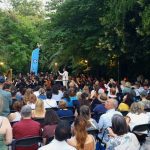
After the official conclusion of the event, participants had the opportunity to continue their discussions at a special networking session and dinner held in the event’s outdoor area. This gathering created additional opportunities to exchange ideas, develop partnerships, and strengthen networking among the stakeholders, contributing to the development of joint initiatives for the future of sustainable tourism development in Monemvasia.