


by Kyriaki Papagiatzoglou
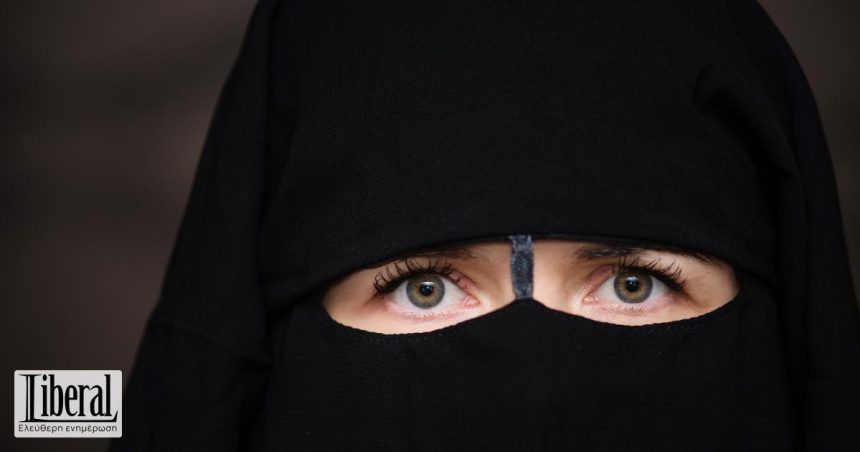
A proposal to ban the hijab in all public spaces in France has reignited a wider debate about religious freedom, discrimination and the boundaries of state intervention in a diverse democratic society.
The debate over the hijab is hardly new in France. Yet the latest proposal put forward by the far-right Rassemblement National (RN) goes considerably further than previous restrictions, seeking to prohibit the wearing of the hijab across public spaces.
Beyond the political controversy, the proposal raises a fundamental question for diversity and inclusion: how far can a democratic state go in restricting an individual’s religious expression, particularly when such restrictions disproportionately affect one group of women?
This question is examined by Lauren Bakir, a researcher in public law at the University of Strasbourg, in an analysis published by The Conversation. She argues that a blanket ban on the hijab in public spaces would be difficult to reconcile with fundamental principles of the rule of law and could conflict with European and international protections of religious freedom and equality.
Secularism Does Not Require Citizens to Be “Neutral”
France’s principle of laïcité, or secularism, has long been central to debates surrounding religious symbols.
But an important distinction is often lost in the public discussion: secularism requires the state and its institutions to remain neutral. It does not necessarily require private citizens to conceal their religious identity whenever they enter a public space.
Public officials, for example, are subject to neutrality requirements while performing their duties. Similarly, the principle of secularism provided part of the legal framework for France’s 2004 legislation restricting conspicuous religious symbols in public schools.
Outside specific institutional settings, however, freedom of religion remains a fundamental principle.
This distinction matters from an inclusion perspective. A diverse society does not necessarily require individuals to make their differences invisible. Inclusion can instead mean creating a common civic space in which people of different beliefs, identities and backgrounds are able to participate on equal terms.
When Religious Expression Is Framed as a Political Threat
One of the most significant developments in the current debate is the way the justification for further restrictions has shifted.
Rather than relying solely on laïcité, supporters of a broader ban have increasingly linked the hijab to Islamism, presenting it not simply as an expression of religious belief but as a possible symbol of political ideology.
That assumption is highly consequential.
Wearing a hijab does not, in itself, establish an individual’s political beliefs. Treating a visible religious practice as evidence of adherence to a political ideology risks transforming an assumption about a group into the basis for restricting individual rights.
From a diversity and inclusion standpoint, this raises a broader concern: individuals should not be reduced to stereotypes attached to their religion, gender, ethnicity or appearance.
If the state has legitimate concerns about specific conduct, those concerns can be addressed on the basis of that conduct. The mere expression of religious identity, however, does not automatically demonstrate a political objective or a threat to public order.
Why Do Muslim Women Wear the Hijab?
There is no single answer.
Research into the experiences of Muslim women shows that the meaning attached to the hijab varies considerably between individuals and communities.
For some women, it is primarily an expression of religious faith. For others, it may form part of their cultural or personal identity. Some women describe wearing it as an autonomous personal choice or as connected to empowerment and self-expression. Experiences can also differ according to generation, family background, social environment and migration history.
Recognising this diversity is essential.
Public debates can sometimes portray Muslim women as a homogeneous group, assuming that the same motivations, experiences or political views apply to everyone who wears a hijab.
An inclusive approach starts from the opposite premise: women should be recognised as individuals capable of defining the meaning of their own choices and identities.
This does not mean that questions surrounding religious practices, gender equality or social pressure should be excluded from public debate. It means that such debates should avoid replacing one generalisation with another.
Religious Freedom and European Human Rights
The legal dimension is equally important.
Article 9 of the European Convention on Human Rights protects freedom of thought, conscience and religion, including the right to manifest religious belief.
That right is not absolute. Governments may impose certain restrictions when they are prescribed by law, pursue a legitimate objective and are necessary in a democratic society.
European courts have previously considered restrictions on religious symbols in specific contexts, including schools and workplaces. But restrictions applying to particular institutional environments are not the same as a blanket prohibition covering public life as a whole.
International human rights standards also protect freedom of religion and equality before the law. Articles 18 and 26 of the International Covenant on Civil and Political Rights address freedom of religion and protection against discrimination respectively.
The central legal question, therefore, is not simply whether the state can regulate religious expression. It is whether a particular restriction is necessary, proportionate and compatible with the fundamental rights the state itself has undertaken to protect.
The Intersection of Religion and Gender
The debate also illustrates why an intersectional approach to discrimination matters.
A prohibition specifically affecting women who wear the hijab does not operate solely along religious lines. Its consequences may also be gendered.
Muslim women who visibly express their faith can experience overlapping forms of disadvantage linked to both religion and gender, including barriers in employment and participation in public life.
This is precisely where diversity and inclusion policies become more than abstract principles.
Inclusion is not simply about ensuring that everyone is formally subject to the same rules. It also requires examining how apparently universal rules affect different groups in practice.
A measure can be written in general terms while producing highly concentrated consequences for a particular community. Understanding those consequences is essential to meaningful discussions about equality.
Inclusion Does Not Mean Avoiding Difficult Conversations
The French debate also highlights a challenge facing many European societies: how to reconcile secular institutions, gender equality, security concerns, individual autonomy and religious freedom in increasingly diverse communities.
There are legitimate disagreements over where those boundaries should lie.
An inclusive society does not require the absence of disagreement, nor does diversity mean that religious practices must be exempt from scrutiny or public debate. What inclusion does require is that individuals are not automatically defined by assumptions attached to the groups to which they belong.
It also requires that restrictions on fundamental freedoms be supported by clear legal reasoning, evidence and proportionality rather than broad generalisations.
A Debate That Goes Beyond the Hijab
Ultimately, the controversy in France is about more than one item of clothing.
It raises a fundamental question about what belonging looks like in a diverse democracy.
Does participation in public life require people to minimise visible differences? Or can democratic societies maintain shared civic principles while allowing citizens to express different religious and cultural identities?
For diversity and inclusion, this distinction is crucial.
The rule of law exists in part to ensure that fundamental rights do not depend solely on the political preferences of the moment. Governments and parliamentary majorities operate within constitutional, European and international legal frameworks designed to protect individual freedoms and equality.
The debate over the hijab therefore reaches beyond France and beyond religion. It concerns the balance between collective rules and individual identity, between state authority and personal freedom, and between formal equality and genuine inclusion.
In increasingly diverse societies, the challenge is not simply learning how to live alongside difference.
It is ensuring that difference does not become, by itself, a reason for exclusion.