


Written by Kyriaki Papayatzoglou
There is something deeply contradictory about the moment a woman steps onto the Oscar stage, holding the coveted statuette. It is an image of victory, recognition, vindication. And yet, behind the applause, there lies a question that grows ever more persistent: is this real progress, or a well-staged illusion of inclusion?
When Michelle Yeoh took the stage in 2023 and declared, “Don’t let anyone tell you that you’re past your prime,” she wasn’t speaking merely as a winner. She was speaking as an exception. An exception in a system that for decades has excluded women who aren’t young, white, and “commercially acceptable.”
Progress That Is Not Enough
Yes, the data shows a shift. The average age of nominees is rising. Names like Frances McDormand and Annette Bening prove that maturity can—sometimes—be rewarded.
But let’s be honest: when, in nearly a century of history, we can count on one hand the number of women over 60 who have won an Oscar for Best Actress, we’re not talking about progress. We’re talking about drops in a desert of inequality.
The problem isn’t just a matter of numbers. It’s structural. A man in his 60s is considered “charming” and “timeless.” A woman of the same age is considered a “difficult choice.” This isn’t just prejudice; it’s systemic sexism.
The real problem lies behind the camera
If we want to talk seriously about inclusion, we need to stop focusing solely on interpretations and start looking at who holds the power.
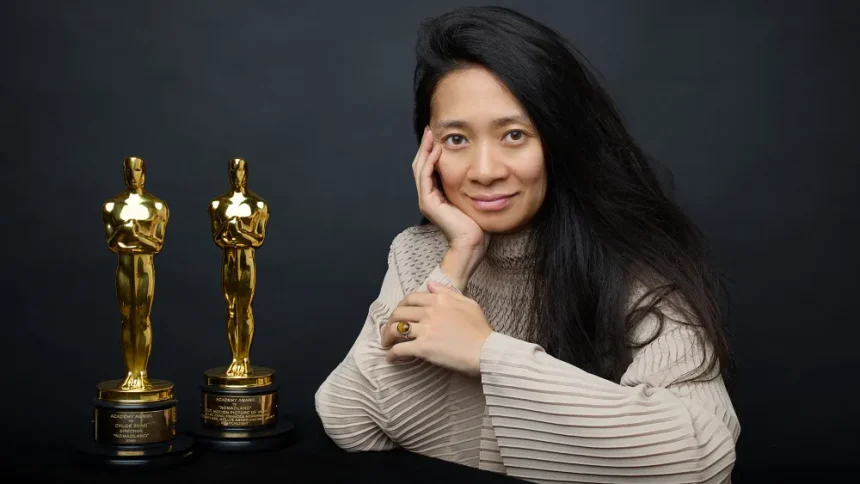
In nearly 100 years of the Oscars, only three women have won the Best Director award: Kathryn Bigelow, Chloé Zhao, and Jane Campion. Three.
This isn’t a statistical anomaly. It’s proof that cinematic storytelling continues to be filtered through a male gaze. And as long as that doesn’t change, “inclusion” will be limited to isolated successes that seem more like exceptions than the rule.
The Invisible Reality of Non-White Women
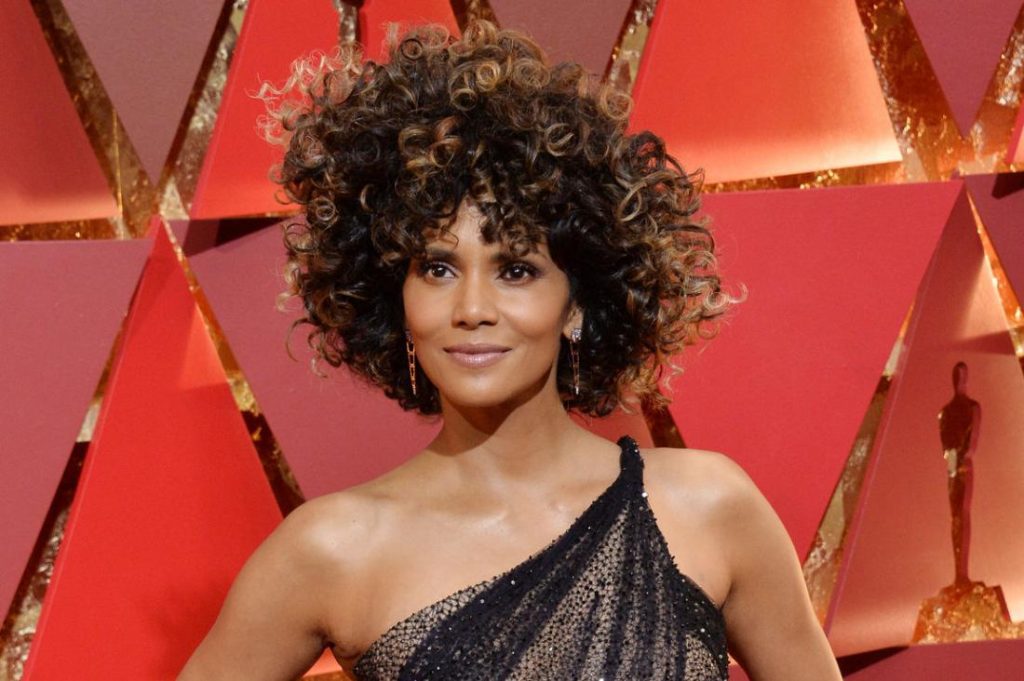
If age is a barrier, race is a wall. Halle Berry made history in 2002 as the first Black woman to win an Oscar for Best Actress. And instead of that moment paving the way, she remained a lone figure at the top for years.
Lily Gladstone’s case in 2024 confirmed something even more troubling: that even today, authentic representation is met with hesitation. Her defeat was not merely an outcome; it was a sign of the limits imposed by the system itself.
And what about older non-white women? They’re practically nonexistent. Not because of a lack of talent, but because of a lack of opportunities.
The “market” is unforgiving
The Oscars are the showcase. But Hollywood operates on market terms. And there, women—especially those who don’t fit the stereotype of youth—are treated as products with an expiration date.
The result? Their stories go untold. Their characters go unwritten. Their presence is erased.
And this has consequences that extend beyond cinema. When the image projected globally excludes certain groups, that absence becomes a social message: “You don’t belong here.”
Inclusion or communication strategy?
The entertainment industry has learned to adapt to social pressures. Increased visibility is not necessarily a sign of changing values; it may simply be a sign of good marketing.
Because true inclusion isn’t measured by individual victories. It’s measured by consistency, by representation at all levels, and by equal opportunities both in front of and behind the camera.
The challenge: from the exception to the rule
Michelle Yeoh, Frances McDormand, Halle Berry, and Chloé Zhao aren’t proof that the system works. They’re proof that it could work—but chooses not to do so consistently.
Inclusion is not a reward. It is a right.
And until Hollywood stops using it as a narrative and starts putting it into practice, the Oscars will remain what they truly are: a glittering stage that shines a light on a few, leaving most in the dark.
The question is not whether progress has been made. The question is: who is still being left behind—and why?