

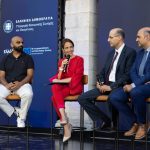



The undergraduate program in “Gender Studies” will begin in the 2026–2027 academic year
The establishment and operation of a new undergraduate program in the Department of Social Anthropology and History at the University of the Aegean, titled “Gender Studies,” has been officially announced through a publication in the Government Gazette.
The new undergraduate program has been accredited by the National Authority for Higher Education and will begin in the 2026–2027 academic year.
The program will award a Bachelor’s degree in “Gender Studies,” and the learning outcomes correspond to first-cycle studies and to Level 6 of the European and National Qualifications Framework for Higher Education.
The duration of study for the award of the Bachelor’s degree is set at eight academic semesters, while the total number of European Credit Transfer System (ECTS) credits required for the award of the degree is 240.
It should be noted that the Department of Social Anthropology and History at the University of the Aegean is based in Mytilene.
Scope and Purpose of the Program
The program aims to study human behavior using the analytical tools of gender, gender relations, and gender representations. The program adopts an interdisciplinary and cross-thematic approach, focusing on the interplay of gender with social class, ethnicity, sexuality, and age within the context of social relations, institutions, and historical changes, with the aim of addressing gender inequalities and discrimination and advancing rights. At the same time, it examines the relationship between gender and technology, and gender and science, with the aim of addressing the social and ethical challenges posed by technology.
The aim of the program is to familiarize students with the methodology and epistemology of gender studies, to familiarize them with the use of gender as an analytical approach, and to train them both in identifying the ways in which gender inequality is shaped and in the practical application of tools and techniques for eliminating discrimination.
The program also aims to provide a solid foundation of knowledge that will enable students to develop a systematic approach to thinking and tackling complex problems, as well as skills that will enable them to connect theoretical knowledge with professional practice.
The program combines theoretical, methodological, and applied approaches across a wide range of geographical and social contexts to provide broad, specialized, practical, and theoretical knowledge in the field of gender studies, as well as the necessary expertise and skills development to address social and cultural inequalities in institutions, public and social services, the labor market, the family, health, and technology.
Learning outcomes
Upon completion of their studies and receipt of their degree, graduates will have acquired a solid understanding of the scientific approaches and findings of contemporary research on gender and gender relations, and will possess the necessary skills to apply theoretical knowledge to professional practice.
Specifically, upon earning the degree, the holder:
will be able to recognize, understand, and critically analyze the ways in which gender shapes human relationships and activities through familiarity with contemporary theories and cutting-edge developments in this field of study, will possess knowledge and skills in data collection, management, and analysis in the field of social sciences, will possess advanced skills in the design and implementation of tools to combat gender inequality and discrimination, will possess the necessary expertise to address social and cultural inequalities in institutions, public and social services, the labor market, the family, health, and technology, will be able to gather and interpret data related to gender and gender differences in order to form judgments that reflect critical thinking on relevant social, scientific, or ethical issues, as well as to communicate information, ideas, problems, and solutions to both specialized and non-specialized audiences, will have developed the skills needed to acquire knowledge, which are necessary to continue on to the next level of study.
In addition, through practice in research methods as part of specific practical exercises and seminars, graduates will be able to conduct small-scale research based on fieldwork and participant observation, literature review, research of historical sources, and the management and utilization of oral testimonies and visual material (depending on the practical exercises/seminars attended), as well as the use of new technologies for the recording, processing, and presenting research material and findings.
The Government Gazette establishing the program and the curriculum in detail
With information from alfavita.gr